Render restoration and re-texture
Rendered walls rarely fail evenly. Moisture, salt-laden air, structural movement and earlier patch repairs all leave their own signature, and by the time the surface looks tired the problem is usually in the render itself rather than the paint on top of it.
Restoration means dealing with the cause: identifying why the surface has broken down, removing what is no longer sound, rebuilding it, and then re-texturing the full elevation so the finish is continuous from corner to corner.
What we look for
Hollow or drummy areas
Tapping the wall gives a hollow note where the render has lost its bond with the substrate behind it. Coating over it only hides the problem for a season or two.
Flaking, blistering or powdery surfaces
Coating lifting away, or a chalky residue on your hand, usually points to moisture moving through the wall or a previous system that has reached the end of its life.
Patchy texture and visible past repairs
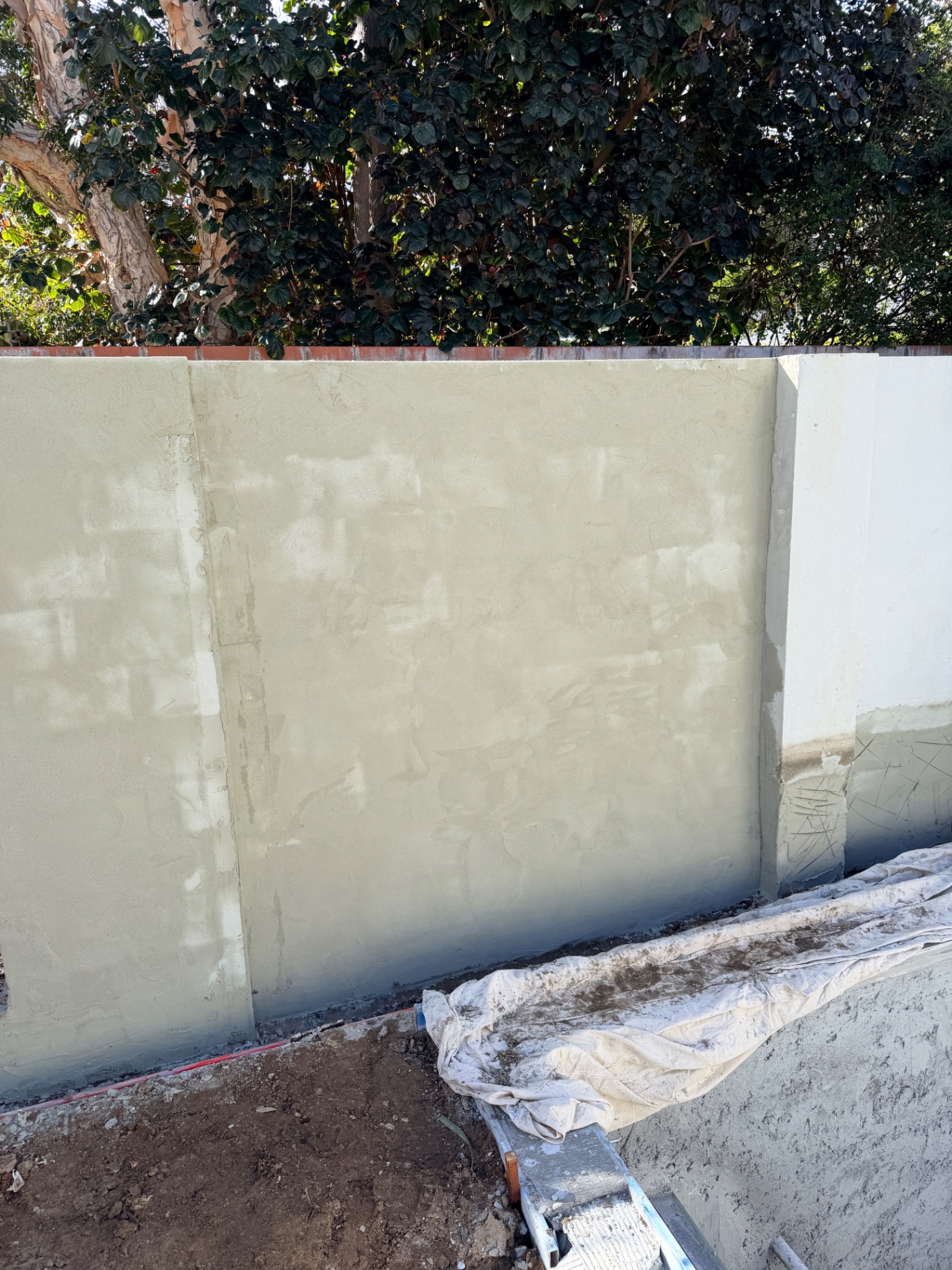
Spot repairs almost never disappear. Different texture grades and ages catch the light differently, which is why we re-texture whole elevations.
Staining and salt deposits
White crystalline bloom or persistent dark staining tells us moisture is finding a path in and carrying salts out with it.
How the work is carried out
- 01
Assess the cause
We inspect the elevation, sound out the render and look for the source — movement, moisture ingress, salt attack, failed detailing or breakdown of a previous coating.
- 02
Remove and rebuild
Unsound render is cut back to sound material and rebuilt in appropriate coats, allowed to cure, and made good so the repair sits flush.
- 03
Re-texture in full
The elevation is re-textured across its whole face so the finished surface is uniform rather than a patchwork of old and new.
- 04
Coat to specification
The Dulux AcraTex system is applied in accordance with the manufacturer's product specification for the prepared surface.
Get this looked at
Send a few photos and a short description of the property and Mark will come back to you, usually within two business days. A site inspection is normally needed before a written quotation.